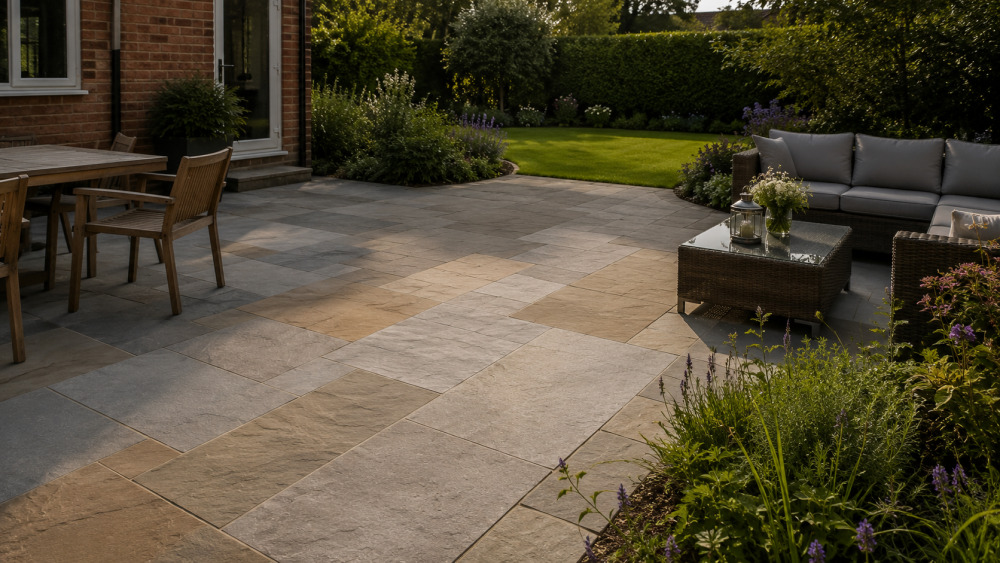
Choosing the right patio slabmatters more than most people realise at the outset, because the material you lay will determine how much time you spend maintaining it, how well it holds up through freeze-thaw cycles and wet winters, and whether it still looks good in ten years or starts to feel like a problem you need to solve. With a reasonable range of options at different price points, it is worth understanding what each material actually offers before you commit.
What are the types of patio slabs?
There are five main patio slab types: concrete, porcelain, natural sandstone, Indian limestone and natural slate. Which one suits your garden comes down to budget, how much maintenance you are prepared to do and the style of your property.
Concrete
Concrete is the most widely used option in the UK, and the reasons are fairly simple. It costs less than natural stone, typically £15 to £35 per m², comes in more finishes than most people expect and does not ask much of you once it is down. A seal every few years and the occasional brush is about the extent of it. For anyone focused on cost and practicality, it is the obvious starting point.
Porcelain
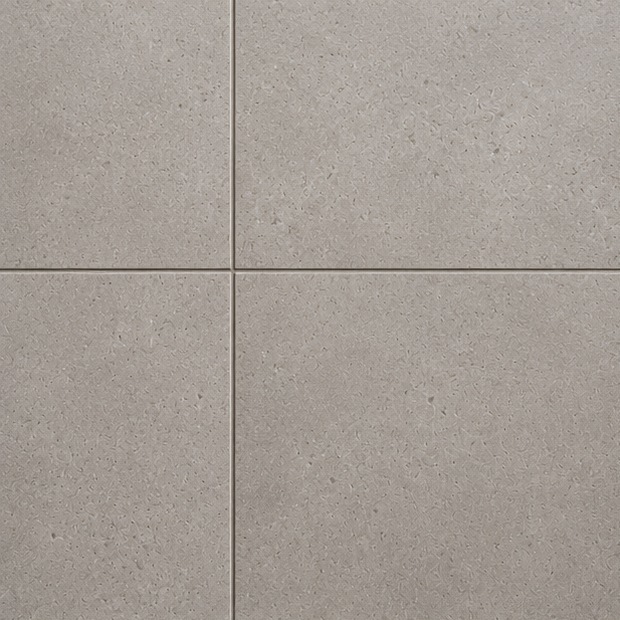
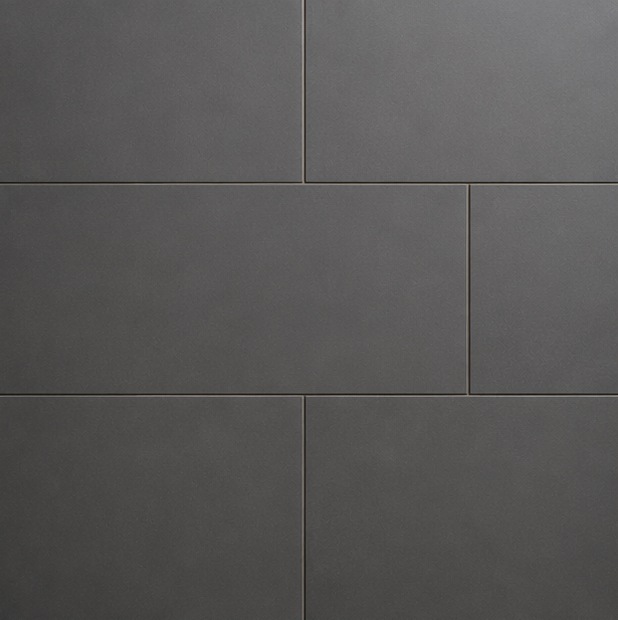
Porcelain has taken over as the go-to for modern garden projects, and it earns that. Frost-proof, stain-resistant and non-absorbent, it holds its appearance through bad winters without much intervention from you. Prices run from £30 to £80 per m².
There is one installation detail worth knowing before you buy. Standard sand and cement will not bond to porcelain because the surface absorbs nothing. Each slab needs a slurry primer coat on the back, and the bedding needs to be a flexible full-bed adhesive. Neither step is complicated, but skip one and you will have hollow spots and moving slabs before the year is out.
Slip resistance is graded using R ratings. R9 is a smooth indoor finish and has no business being laid outside. R10 is the standard for outdoor use and covers most domestic patios without issue. R11 is worth paying for if you have young children, older relatives around regularly or a poolside area to think about.
Sandstone
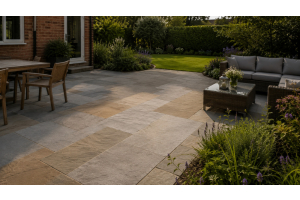
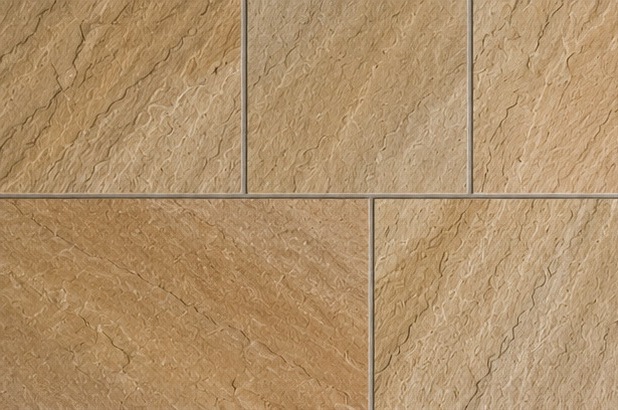
Sandstone suits traditional and period properties well. The warm buff and golden tones fit older gardens in a way manufactured materials rarely manage, and the naturally textured surface handles wet conditions without any additional treatment. It sits in the £25 to £55 per m² range.
The downside is maintenance. It is porous, needs sealing on installation and roughly every year after that. In a shaded or north-facing garden, you will need to stay on top of cleaning too. Do that and it ages well. Let it slide and moss and staining become a recurring problem.
Slate
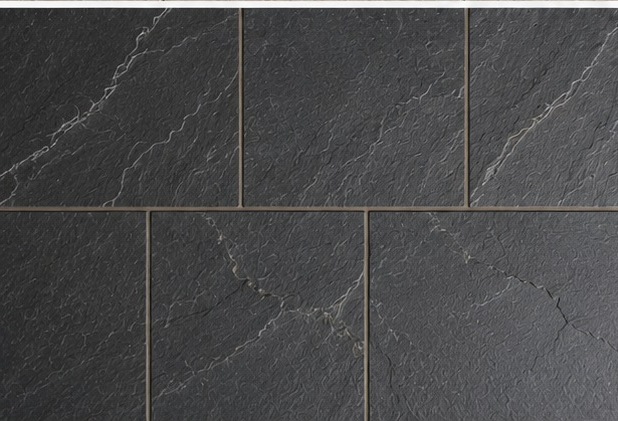
Slate is at the premium end, £40 to £75 per m², and the deep charcoal and grey-green tones lend themselves to contemporary builds and coastal-influenced planting. The riven surface provides excellent grip in wet conditions and needs no additional treatment for that. Maintenance is relatively straightforward: periodic sealing keeps it looking right without much effort.
One thing to factor in is that the natural variation in a riven finish means laying quality matters. Uneven slabs will make furniture feel unstable, so it is worth using an experienced installer.
Indian Limestone
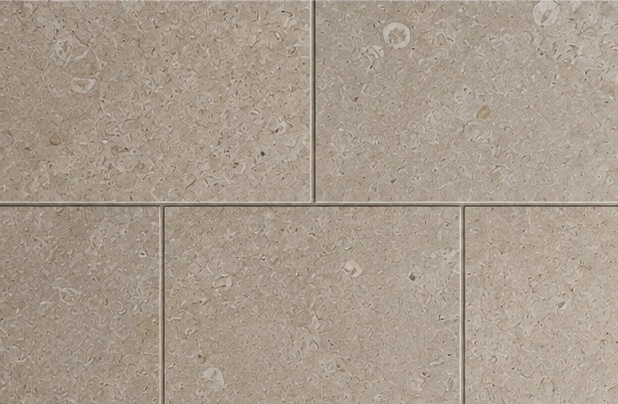
Indian limestone is where a lot of people end up, and it is a reasonable place to land. It is the most affordable natural stone on this list at £20 to £45 per m², but it still has the colour variation and slight surface irregularity you are actually paying for when you choose stone over concrete.
Colours run from cool silver-grey and fossil-cream through to warmer buff and sandy tones, so it works across a fair range of garden styles. It is porous, so seal it properly on installation and plan to do it again periodically. The other thing worth checking before you order is the slip resistance rating, because it varies more between grades of Indian limestone than it does with some other materials. If the patio stays damp for much of the year, that detail matters.