Start with the formula: length (m) x width (m) x depth (m), which gives you your volume in cubic metres.
To put that into practice, say you're laying a new lawn that measures 4m x 3m and you want 150mm of topsoil underneath. That's 4 x 3 x 0.15, which comes to 1.8m³, and you'd want to round that up to 2m³ to account for what you lose to settling and compaction. Topsoil firms down slightly when it's raked level and walked on, so the volume you order and the volume that ends up in the ground aren't quite the same thing. Building in a 10 to15% buffer covers that gap without leaving you with a significant amount to deal with afterwards.
How Deep Should Topsoil Be?
The right depth varies quite a bit depending on what you're laying or planting, and it's one of those things that's much harder to correct once the job is done than it is to allow for at the planning stage.
Application | Depth | Notes |
New lawn from screed | 100 to 150mm | 150mm handles drought better |
Lawn top dressing | 10 to 20mm | Rake into a scarified lawn |
Raised vegetable bed | 200 to 300mm | Mix with compost |
Flower borders | 150 to 200mm | Fine for most perennials |
Tree/shrub planting | 300 to 450mm | Deeper for larger specimens |
For a new lawn, 100mm is the minimum you'd want to work with, though 150mm gives the grass a better chance of rooting deeply and holding up through a dry summer without going patchy. The difference in the amount of topsoil you need isn't dramatic, but the difference in how the lawn performs in its first couple of years can be.
Raised vegetable beds benefit from as much depth as the structure allows, because vegetables running into compacted subsoil before they've properly established tend to struggle. A 50/50 mix of topsoil and compost at that depth improves drainage and gives plants something nutritious to root into as they grow.
Bags or Bulk?
For a small top dressing job or a single raised bed, bags are perfectly practical and easy enough to manage. Once you're covering anything much beyond 5 or 6 square metres though, bulk topsoil becomes noticeably cheaper per cubic metre and saves a significant amount of physical work compared to shifting individual bags around the garden.
Bulk bag (approx. 1 tonne) | 25-litre bags | |
Coverage at 100mm depth | Approx 10m² | 1 bag ≈ 0.025m² |
Volume | 0.7 to 0.8m³ | 40 bags ≈ 1m³ |
Best for | Lawns, borders, and bigger jobs | Top dressing, small patches |
One cubic metre works out at roughly 40 x 25-litre bags, so a job requiring 2m³ means handling 80 individual bags, cutting them open and emptying every one. A bulk bag delivered to the drive and barrowed across in a few loads is a very different proposition in terms of time and effort.
Bulk bags are delivered by lorry and need a reasonable area of flat ground to land on, so for back gardens with a narrow side access it's worth measuring the gap before placing an order rather than finding out on delivery day.
Screened or Unscreened?
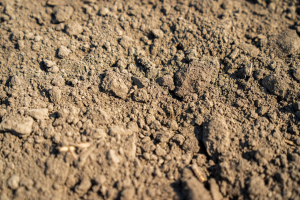
Screened topsoil has been passed through a mesh during processing to remove stones, roots and larger lumps, leaving a finer, more consistent material that rakes cleanly and levels well. For seeding a lawn or filling a raised bed where you want an even surface and good seed-to-soil contact, screened is the practical choice.
Unscreened topsoil costs less and works well for jobs where surface quality isn't the main concern, such as filling behind retaining walls, raising low areas of ground, or anywhere the topsoil is going to be built over rather than grown in. For anything you're seeding or planting directly into, the difference in cost between screened and unscreened is small enough that it's rarely worth compromising on.
What the BS 3882 Grades Mean
Topsoil sold to BS 3882 has been independently tested and assigned one of three grades. General Purpose covers the majority of garden work including borders, planting and general landscaping. Landscape Grade has tighter specifications around pH, organic matter and soil texture, making it a better fit for lawn laying where you need reliable, consistent results across a larger area. Premium is the highest specification and tends to be used on sports surfaces or larger commercial and landscaping projects rather than in domestic gardens.
For most home gardens, General Purpose or Landscape Grade is perfectly adequate, and a supplier who knows their product should be able to point you toward the right one based on what you're actually doing.
FAQs
How do I calculate how much topsoil I need?
Multiply length by width by depth, all measured in metres, to get your volume in cubic metres, then add 10–15% on top of that figure before deciding whether bags or bulk is the more practical option for the quantity you need.
How many bags do I need for a raised bed?
A standard 1.2m x 2.4m bed filled to 250mm deep works out at around 0.72m³, which is the equivalent of roughly 29 x 25-litre bags, and at that sort of volume a bulk bag tends to be better value and considerably less work to deal with.
What's the difference between topsoil and compost?
Topsoil provides the structure and volume that plants root into, while compost improves drainage, moisture retention and nutrients but doesn't have enough body on its own to act as a growing medium. For beds and borders, mixing the two together produces better results than using either in isolation.
Can I lay turf straight onto topsoil?
Yes, provided it's been firmed down and raked to a reasonably level surface with at least 100mm of depth underneath, and leaving it a day or two to settle before the turf goes down is worthwhile when the schedule allows for it.
Topsoil in Northamptonshire
Joseph Parr stocks screened topsoil at our Kettering branch, with bulk bag delivery available across Northamptonshire.
For advice on specifications, feel free to get in touch with our team of experts, who can provide tailored guidance on every purchase you make.